
 English
Views: 0 Author: Site Editor Publish Time: 2026-11-02 Origin: Site
High-gloss, polished metal caskets represent a significant segment of premium funeral merchandise today. They successfully balance visual dignity alongside essential structural permanence. Families often gravitate toward these brilliant finishes during highly emotional purchasing moments. For funeral home directors and procurement managers, selecting appropriate inventory requires moving far beyond basic aesthetics. Professionals must strictly evaluate structural integrity. You need to assess protective sealing features and verify supply chain reliability carefully. Ignoring these factors often causes compromised showroom presentations or serious logistical failures at the gravesite. This guide provides a highly practical, evidence-based framework for evaluating any Polish Metal Casket on the market. We detail critical material specifications and examine practical industry applications thoroughly. Readers will discover key criteria for shortlisting trusted suppliers, ensuring high product performance.
Material Grading: Polish metal caskets are primarily evaluated by metal type (carbon steel, stainless, copper, bronze) and thickness (typically 18-gauge or 20-gauge).
Finish Integrity: The "polish" relies on multi-layer industrial coating processes that require specific quality control to prevent chipping or oxidation.
Protective vs. Non-Protective: The inclusion of rubber gaskets for sealing is a primary decision-making factor influencing both price and environmental resistance.
Procurement Logic: Successful sourcing requires balancing aesthetic appeal with logistical realities, including weight management and showroom ROI.
Understanding the fundamental construction of a Polish Metal Casket helps procurement managers make informed purchasing decisions. The underlying metal determines both durability and overall weight. Meanwhile, the exterior finish dictates showroom appeal.
Manufacturers utilize various metals to construct caskets. Each material offers distinct structural benefits and price points. The industry categorizes these metals into standard and premium tiers.
Carbon Steel: This material forms the industry baseline. Suppliers evaluate carbon steel using gauge measurements. Lower gauge numbers indicate thicker metal. Therefore, an 18-gauge unit feels heavier and more rigid. It represents a premium standard. Conversely, a 20-gauge unit weighs less and costs less. It provides a highly cost-effective solution for budget-conscious families.
Premium Metals: This tier includes stainless steel, copper, and bronze. Manufacturers measure these materials in ounces per square foot rather than gauge. For example, a 32-ounce copper unit indicates the weight of one square foot of the metal. These premium materials naturally resist oxidation far better than standard carbon steel. They offer exceptional longevity in underground environments.
Metal Composition Specifications
Material Category | Measurement Standard | Relative Weight | Oxidation Resistance |
|---|---|---|---|
Carbon Steel (20-Gauge) | Gauge (Thickness) | Lightest | Low to Moderate |
Carbon Steel (18-Gauge) | Gauge (Thickness) | Moderate | Moderate |
Stainless Steel | Ounces per Sq. Ft. | Heavy | High |
Copper / Bronze | Ounces per Sq. Ft. | Heaviest | Maximum |
Achieving a mirror-like finish requires rigorous industrial processing. The "polish" relies entirely on multiple protective layers. A single flaw during application compromises the entire exterior.
Rust-Inhibiting Primer: Technicians apply a specialized primer directly to the raw metal. This base layer prevents rust formation beneath the paint.
Automotive-Grade Paint: The factory sprays high-quality, automotive-grade paint over the primer. This step introduces the core color.
High-Gloss Clear Coat: A final clear coat seals the paint. Technicians buff this layer extensively to create the signature high-gloss reflection.
You can easily spot quality indicators during inventory inspections. Look for absolute uniformity in the reflection. Check for the absence of "orange peel" texture on flat surfaces. Finally, inspect the edge-coating integrity around the lid seams. Poorly coated edges often chip prematurely.
The hardware must support substantial weight while maintaining visual elegance. Handle design impacts both aesthetics and practical handling.
Swing-bar handles articulate away from the shell. They provide pallbearers ample hand clearance during transport. This design typically appears on premium models. Stationary handles remain fixed tightly against the side panels. They cost less to manufacture but offer less grip space.
Furthermore, you must assess the load-bearing hinges. The lid hinges carry significant stress during viewing setups. Locking mechanisms also require smooth operation. A stiff lock often indicates poor factory alignment.
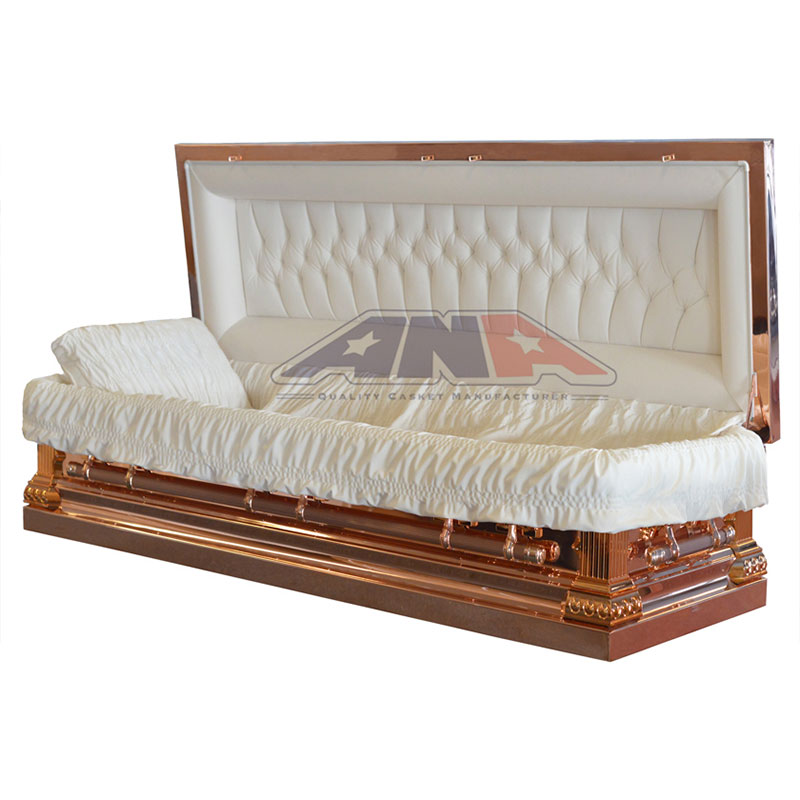
Visual appeal alone cannot drive procurement decisions. Functional features heavily influence the final retail price. You must evaluate protective elements and interior quality rigorously.
A continuous rubber gasket transforms a standard metal shell into a protective unit. Manufacturers install this rubber seal along the perimeter of the base shell. A specialized locking key system pulls the lid down tightly against this gasket. This creates a highly secure, airtight seal.
Industry professionals must maintain transparent claims regarding these gaskets. Gaskets effectively protect against immediate elemental intrusion from water and soil. However, they do not indefinitely prevent natural biological decomposition. Misrepresenting this reality violates consumer trust and federal guidelines.
The interior textile design directly impacts the viewing experience. Suppliers primarily offer two common textile options.
Crepe: This represents the standard option. It features a slightly crinkled texture. Crepe remains highly durable and budget-friendly.
Velvet: Velvet serves as the premium upgrade. It provides a soft, plush appearance. Families often expect velvet interiors inside high-end 18-gauge or copper units.
You must also evaluate the adjustable bed mechanisms. Most models feature hardware to tilt and elevate the mattress. Ensure this hardware operates smoothly. Reliable tilt adjustment proves critical for achieving proper presentation angles during public viewings.
Underground environments subject metal to harsh corrosive forces. Premium metals utilize specific properties to mitigate rust over extended burial periods.
Copper and bronze naturally resist rust without extra coatings. However, some manufacturers apply specialized chemical treatments to carbon steel models. These treatments act as cathodic protection. They sacrifice specific surface ions to slow overall corrosion. Understanding these scientific principles helps you explain premium pricing to curious families.
Proper inventory selection directly affects your business profitability. Integrating these high-gloss units requires deliberate showroom strategies.
Polished metal units serve perfectly as anchor products. You can utilize them to establish tiered pricing strategies effectively. Place a premium 18-gauge Polish Metal Casket near the center of your display room.
Visual differentiation plays a massive role in consumer psychology. Use high-gloss finishes to contrast sharply against matte wood options. Direct overhead spotlights onto the clear coat. The resulting brilliant reflection instantly draws the eye. This strategic placement routinely increases the average return on investment (ROI) per family arrangement.
Understanding why consumers select these specific models improves your consultation approach. Several core drivers influence their choices.
First, consumers perceive heavy metal as highly durable. The term "protective" provides profound emotional comfort. Second, families appreciate customized automotive-style colors. You can offer deep metallic blues, rich burgundies, or elegant silver finishes. These colors allow families to personalize the memorial experience. Finally, the glossy finish projects undeniable aesthetic prestige.
Logistical realities demand careful staff training. Standard wood units weigh significantly less than metal alternatives.
An 18-gauge unit carries considerable mass. Add the weight of the deceased, and transport becomes challenging. Funeral home staff must practice strict weight management protocols. Ensure your equipment can handle the increased load safely. Train employees on proper lifting techniques to prevent workplace injuries.
Daily operations expose these sensitive surfaces to numerous risks. You must implement specific handling guidelines to preserve the finish.
High-gloss surfaces act like mirrors. They easily reveal fingerprints, dust, and smudges. During transit from the storage room to the viewing parlor, staff will inevitably touch the exterior.
You must mitigate this issue aggressively. Implement specific handling protocols. Staff should wear soft cotton gloves when moving the unit. Prior to the family viewing, employees must perform a final wipe-down. We highly recommend using clean microfiber cloths. Paper towels will create permanent micro-scratches in the clear coat. Specialized automotive detailing sprays remove stubborn smudges safely.
Heavy units require robust logistical support. Pallbearers often struggle if they lack physical strength. Directors must assess the pallbearers' capabilities before the service begins. If necessary, provide a wheeled church truck early in the procession.
Graveside operations also face limits. Ensure the cemetery uses heavy-duty, specialized lowering devices. Standard straps might slip or snap under extreme loads. Always verify weight capacities with your cemetery partners beforehand.
Not every burial environment suits a heavily sealed metal unit. You must assess local conditions carefully.
Highly acidic soil accelerates carbon steel degradation. In these regions, you might recommend stainless steel or copper instead. Additionally, study local mausoleum regulations. Above-ground crypts experience intense temperature fluctuations. A perfectly sealed gasketed unit can trap expanding gases. Therefore, many mausoleums strictly require venting mechanisms. Some crypts ban heavily sealed units altogether. Always verify environmental compatibility before finalizing the sale.
Procuring reliable inventory safeguards your professional reputation. You must evaluate potential suppliers using strict, objective criteria.
Never commit to a large inventory order without inspecting physical samples first. Order one or two units to test factory standards.
Evaluate the weld consistency along the bottom seams. Rough or uneven welds indicate rushed manufacturing. Inspect the joint finish near the corners. The metal should bend smoothly without sharp burrs. Finally, test the paint adhesion. Check the hidden areas beneath the lid. If the paint flakes easily there, the exterior clear coat will likely fail soon.
You must balance the benefits of domestic distributors against direct manufacturing imports. Domestic distributors offer rapid lead times. You can often receive a unit overnight. However, they charge premium wholesale prices.
Direct manufacturing imports cost significantly less. They maximize your profit margins. Yet, they require long lead times and bulk orders. Regardless of origin, evaluate the supplier's packaging standards closely. High-gloss finishes require extensive protection during freight transit. Ensure the supplier uses rigid corner protectors, thick foam wrapping, and heavy-duty cardboard. Poor packaging always ruins a flawless polish.
Protect your business from liability by reviewing manufacturer warranties thoroughly. The warranty must cover paint defect rates explicitly. It should also guarantee gasket seal integrity upon arrival.
Furthermore, you must ensure total compliance with FTC Funeral Rule requirements. Suppliers must provide accurate material disclosures. If a manufacturer claims a unit is 18-gauge steel, it must measure exactly to that standard. Mislabeling materials exposes your funeral home to severe federal penalties. Only partner with transparent, highly documented manufacturers.
A high-quality polished metal casket beautifully aligns aesthetic brilliance with rigorous structural standards. Every element matters, from the specific gauge thickness to the continuous gasket integrity. When you master these structural details, you can educate families confidently and transparently.
We recommend taking immediate action to optimize your inventory. First, audit your current suppliers to verify their gauge accuracy and paint warranties. Second, update your staff handling protocols to include microfiber detailing prior to all viewings. Finally, funeral industry professionals should prioritize suppliers who provide transparent specifications, reliable freight packaging, and consistent automotive-grade finishes. This strategic approach ensures high showroom performance, protects your profit margins, and guarantees long-term client satisfaction.
A: The primary difference lies in the steel thickness. An 18-gauge casket uses thicker steel, making it roughly 30% heavier and stronger than a 20-gauge model. This increased thickness provides higher structural integrity and delivers a more premium, rigid feel. 20-gauge models use thinner steel, offering a lighter, highly cost-effective alternative for budget-conscious buyers.
A: No. While gasketed metal caskets effectively resist external elements like water, air, and soil intrusion, no casket prevents natural biological breakdown. The internal environment remains subject to natural processes. Industry regulations require funeral professionals to maintain strict transparency regarding this fact to avoid misleading consumers about preservation capabilities.
A: Staff should strictly avoid using paper towels or abrasive chemical cleaners. Best practices require using clean, soft microfiber cloths combined with specialized automotive detailing sprays. This gentle method effectively removes fingerprints and transit smudges without creating micro-scratches in the delicate clear coat finish.
A: No. While protective rubber gaskets serve as a standard feature on most 18-gauge and premium metal models, they are not universal. Manufacturers often produce 20-gauge models in both gasketed and non-gasketed variations. This allows suppliers to accommodate different consumer price points while still providing an attractive high-gloss exterior.


