
 English
Views: 0 Author: Site Editor Publish Time: 2026-08-11 Origin: Site
Purchasing a casket often happens during times of deep emotional distress. Families face strict deadlines while navigating profound grief. We understand your skepticism right now. The funeral industry remains heavily commercialized today. You will likely face pressure to upgrade to expensive models featuring "protective" elements. Finding clarity amidst these sales pitches feels impossible.
This guide offers an objective, fact-based breakdown of your options. We aim to help you make a confident, financially sound decision. You deserve to choose the right resting place without carrying any guilt. You will learn the actual mechanics behind these products. We will explore material limitations and debunk common preservation myths. Our goal is to empower you. We want you to navigate the funeral home selection process as an informed buyer.
The Core Difference: Gasketed caskets feature a rubber seal designed to keep outside elements (water, dirt) out; non-gasketed caskets do not.
The Reality of Preservation: Neither option prevents the natural decomposition of the body. Claims suggesting a gasket will preserve a body indefinitely are scientifically false.
Material Constraints: Hardwood caskets are almost exclusively non-gasketed. Gasketed options are typically limited to metal (steel, copper, bronze) caskets.
Cost Implications: Gasketed models generally carry a premium markup, impacting overall funeral budgets.
Compliance Triggers: Specific situations (e.g., above-ground mausoleum entombment or international air transport) may dictate which type is required by local bylaws or airline policies.
Understanding funeral terminology is your first step toward an informed decision. Industry professionals often use confusing jargon. They might refer to certain products as "sealed" or "protective" models. We must strip away the marketing bias. Let us look purely at the mechanical differences between your choices.
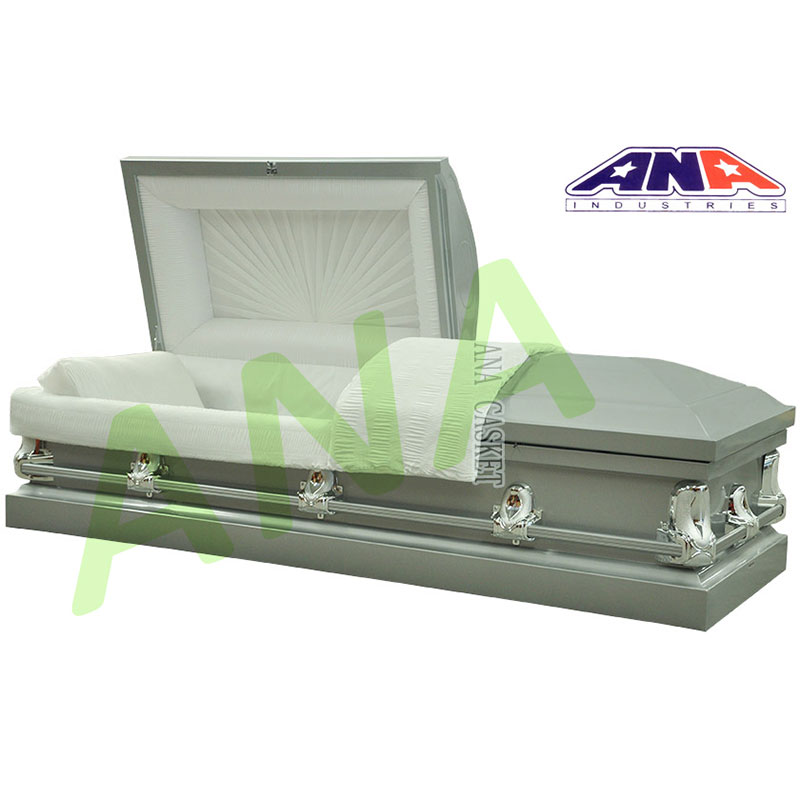
When you explore Gasketed Caskets, you will notice specific structural features. The core component is a one-piece rubber gasket. This thick rubber seal lines the entire perimeter of the casket lid. When the lid closes, it rests directly against this barrier.
These models require a specialized locking mechanism. Funeral directors typically use a key crank system. They insert a specialized hex key into an opening at the foot of the unit. Turning this key activates internal threaded rods. These rods pull the lid tightly against the rubber seal. This action compresses the gasket to create an environmental barrier.
The primary function of this seal is highly specific. It is designed solely to resist the intrusion of exterior gravesite elements. This barrier keeps soil, groundwater, and insects out of the interior space. It creates a physical boundary between the remains and the surrounding earth.
Conversely, Non-Gasketed Caskets represent the traditional standard. These models lack the rubber lining entirely. They also do not include the pressurized crank mechanism.
Their physical mechanics are straightforward. The lids close securely using standard hinges and latches. While they shut tightly, they do not create an airtight or watertight environment. Families often choose these models for their classic designs. They prioritize natural aesthetics and traditional burial practices over environmental sealing.
Many buyers assume a sealed environment stops natural decay. Some salespeople lean heavily on this misconception. We must address this "protective" upsell with transparent, scientific realities. Building trust requires looking at the facts surrounding human decomposition.
The Federal Trade Commission (FTC) heavily regulates funeral sales. The FTC Funeral Rule strictly prohibits deceptive practices. Federal law forbids funeral providers from making false preservation claims. No provider can legally state that any casket will delay natural decomposition indefinitely. If a salesperson suggests a rubber seal guarantees eternal preservation, they are violating federal regulations. You should view such claims as a major red flag.
You must understand the science of the sealing process. A rubber gasket certainly keeps outside elements out. However, it also traps inside elements in. The human body contains naturally occurring bacteria. This bacteria drives the decomposition process from within. Anaerobic decomposition occurs regardless of a vacuum seal. In fact, sealing off oxygen changes the nature of this process. It shifts from aerobic to anaerobic breakdown. The environment inside the sealed unit eventually breaks down the remains anyway.
Total sealing introduces unique structural risks. Anaerobic decomposition generates significant gases. If a unit is completely airtight, this gas has nowhere to go. Gas buildup creates immense internal pressure. This presents a serious issue for above-ground mausoleums. Fully sealed units can warp, buckle, or blow out their seals. To prevent structural failure, manufacturers install a pressure-relief valve. Industry professionals call this a "burper tube." This valve releases built-up gases into the environment. It prevents fluid leakage and structural damage. Therefore, the unit is never truly hermetically sealed forever.
You should reframe how you view these products. A rubber seal is not a tool for preservation. It is simply a tool for environmental separation. It delays the intrusion of soil and water. It does not freeze time. Understanding this biological reality helps remove the emotional pressure from your purchase.
Your choice of material heavily dictates your sealing options. You cannot mix and match every feature. We must map these product categories directly to your material preferences. This helps narrow down your search efficiently.
Rubber seals pair almost exclusively with metal structures. Metal does not warp or change shape over time. This rigidity allows the locking mechanism to maintain steady pressure against the rubber.
Standard Steel: You will find seals standard on 18-gauge and 20-gauge steel models. The lower the gauge number, the thicker the steel.
Premium Metals: Stainless steel, copper, and bronze models almost always include a seal. These metals resist rust naturally. Adding a seal complements their durable nature.
Industrial Priorities: Choose these if you prioritize industrial durability. They also offer specific metallic finishes and vibrant paint colors unavailable in wood.
Certain materials physically cannot support a vacuum seal. If you prefer natural elements, you will bypass the seal entirely.
Wood Limitations: Wood is a porous, natural material. It breathes over time. It expands and contracts alongside humidity and temperature changes. Therefore, solid hardwoods cannot maintain a vacuum seal. If you want mahogany, oak, cherry, or pine, you must choose an unsealed model.
Metal Alternatives: Some lower-gauge steel models omit the seal. Manufacturers design these as budget-friendly alternatives. They offer the look of metal without the premium price tag.
Green Burials: Eco-friendly burials require rapid return to the earth. Biodegradable materials like wicker, untreated pine, and heavy cardboard are strictly unsealed. They encourage natural breakdown rather than preventing it.
Material Type | Common Sub-Types | Seal Availability | Best For |
|---|---|---|---|
Standard Metal | 18-Gauge, 20-Gauge Steel | Usually Included | Durability, vibrant colors, environmental separation. |
Premium Metal | Copper, Bronze, Stainless | Always Included | Maximum rust resistance and premium finishes. |
Solid Hardwood | Oak, Mahogany, Cherry | Never Included | Traditional aesthetics, warmth, classic funeral styles. |
Eco-Friendly | Wicker, Pine, Cardboard | Never Included | Green burials, rapid natural decomposition. |
You need a practical framework for evaluating your choice. We must look beyond emotional appeals. Let us examine the exact use cases involving cost, cemetery rules, and transportation.
Budgeting remains a critical part of funeral planning. Sealed models generally carry a premium markup. You can expect to pay anywhere from $200 to $800 more for a sealed unit compared to a standard equivalent. You must assess the return on this investment. Does the emotional peace of mind justify this premium? If knowing the elements stay out brings you deep comfort, the cost makes sense. If you understand the realities of decomposition and prefer to save money, skip the upgrade.
Your burial location often dictates your purchasing options. You must verify local bylaws before finalizing any purchase.
Above-Ground Entombment (Crypts): Mausoleums have highly specific, localized rules. Some facilities strictly require a sealed unit to prevent fluid leaks. Conversely, other facilities strictly ban them. They fear the gas buildup risks discussed earlier. You must ask the mausoleum director for their written policy.
Ground Burial: Most modern cemeteries require an outer burial container. This usually means a concrete vault or grave liner. The vault prevents the ground from caving in as the casket deteriorates. If the cemetery requires a sealed concrete vault, buying a sealed casket becomes redundant. The vault already provides the environmental protection you are paying for.
Logistics play a massive role if the deceased needs relocation. Transportation rules supersede personal preferences.
Domestic Transit: Moving remains across state lines by train or truck rarely requires special sealing. Standard models generally suffice.
International Air Transit: Repatriation changes everything. Airlines and receiving countries maintain strict health regulations. They often require hermetically sealed containers for international air transport. If you are flying remains overseas, you will likely need a sealed metal unit. Check with the consulate of the receiving country early in the process.
We have covered the mechanics, myths, and regulations. Now, we must guide you to a definitive choice. Use this conditional logic to finalize your decision confidently.
Your overall funeral budget is the primary concern for your family.
You prefer the warmth, craftsmanship, and tradition of a solid hardwood unit.
You are planning a natural or green burial in a certified eco-cemetery.
Your chosen cemetery already requires a sealed concrete outer burial vault, making internal rubber seals redundant.
You accept the natural biological process of decomposition and do not wish to interfere with it.
You find deep psychological comfort knowing exterior environmental elements remain outside the unit.
The specific bylaws of your chosen above-ground mausoleum mandate this feature.
You are transporting the remains internationally via air carriers that require hermetic sealing.
Your preferred aesthetic happens to be a higher-end steel, copper, or bronze model where manufacturers include the feature by default.
Navigating funeral arrangements requires balancing emotion with practical reality. There is no legally or medically "wrong" choice here. You only need to find what aligns with your budget, your material preferences, and your cemetery's requirements. Remember that neither option preserves the body forever. The decision rests entirely on logistics and personal peace of mind.
Your next step is straightforward. Contact your chosen funeral director. Ask them to provide their General Price List (GPL). Explicitly request to see both sealed and unsealed options. Compare the pricing side-by-side. Use the knowledge from this guide to ask informed questions about vault redundancies and mausoleum rules. Taking these steps ensures you honor your loved one without overspending.
A: Emphatically no. No state or federal law requires you to purchase a sealed unit for a standard ground burial. The FTC Funeral Rule explicitly protects your right to choose standard options. Laws only intervene in highly specific logistical scenarios, such as international air transport.
A: A casket's features do not dictate vault requirements. Cemetery bylaws dictate vault requirements. Cemeteries require vaults to keep the ground from collapsing over time. Having a rubber seal does not replace the structural support of a concrete burial vault.
A: Yes, eventually. Standard models do not possess watertight seals. Over time, ground burials naturally incorporate exterior elements like moisture and soil. This is a normal part of the earth's natural breakdown process.
A: No. Wood is a porous, natural material. It expands and contracts as temperature and humidity change. Because of this constant shifting, a rubber seal cannot maintain a secure, airtight vacuum. Therefore, wooden units are exclusively unsealed.


