
 English
Views: 0 Author: Site Editor Publish Time: 2026-08-06 Origin: Site
Navigating funeral arrangements often introduces a confusing maze of unfamiliar industry jargon. You are already dealing with an emotional burden. The last thing you need is stress over technical terms. The most common source of confusion when evaluating metal caskets is the steel gauge measurement. Buyers frequently struggle to understand if paying a premium for a thicker gauge brings meaningful real-world benefits. You might wonder if opting for a thinner gauge sacrifices structural integrity.
We aim to demystify this steel gauge measurement system once and for all. We will compare the structural and cosmetic differences between the available options. You will gain a clear, evidence-based framework for choosing the right casket to fit your budget and logistical needs. Families deserve absolute transparency during difficult times. You should not have to guess about material durability or cosmetic value. By the end of this guide, you will know exactly what matters.
The Inverse Rule: In metal manufacturing, a lower gauge number means thicker steel. Therefore, an 18 gauge steel casket is significantly thicker and heavier than a 20 gauge steel casket.
Pricing Impact: 20 gauge models are the industry standard for budget-conscious buyers, while 18 gauge models command a premium due to higher material costs and upgraded cosmetic features.
The Durability Reality: Both 18 and 20 gauge steel provide ample structural integrity for standard burial requirements; thicker steel does not guarantee the preservation of remains, despite common industry misconceptions.
Logistical Considerations: 18 gauge caskets can weigh 30 to 50 pounds more than 20 gauge models, which should be factored into pallbearer capabilities and shipping logistics.
The term gauge refers to the standard measurement for sheet metal thickness. Manufacturers across various industries use this universal system. The rule is simple but counterintuitive. A lower number indicates thicker metal. A higher number indicates thinner metal. This system originated from early wire manufacturing. Today, it remains the standard for classifying steel used in burial products.
To better grasp these measurements, consider a few practical analogies from everyday life:
18 Gauge Steel: This metal measures approximately 1/20th of an inch thick. You encounter this thickness frequently. It compares closely to the heavy-duty steel used in modern car hoods. Premium household appliances also utilize this sturdy material. It feels rigid and substantial to the touch.
20 Gauge Steel: This metal measures approximately 1/32nd of an inch thick. It serves as the standard for many commercial products. You will find it in standard automotive body panels. Heavy-duty license plates also share a similar thickness. It offers excellent flexibility during manufacturing while retaining high strength.
Both gauges meet strict manufacturing standards. Thinner steel does not mean inferior quality. Factories subject both 18 and 20 gauge metals to rigorous structural testing. Engineers verify weight-bearing capacities before approving designs. Furthermore, manufacturers treat both gauges extensively before assembly. They apply chemical rust-inhibiting coatings. These treatments protect the raw metal from early oxidation. Factory technicians then apply specialized primers before the final paint goes on. This uniform preparation ensures lasting structural integrity regardless of the specific gauge.
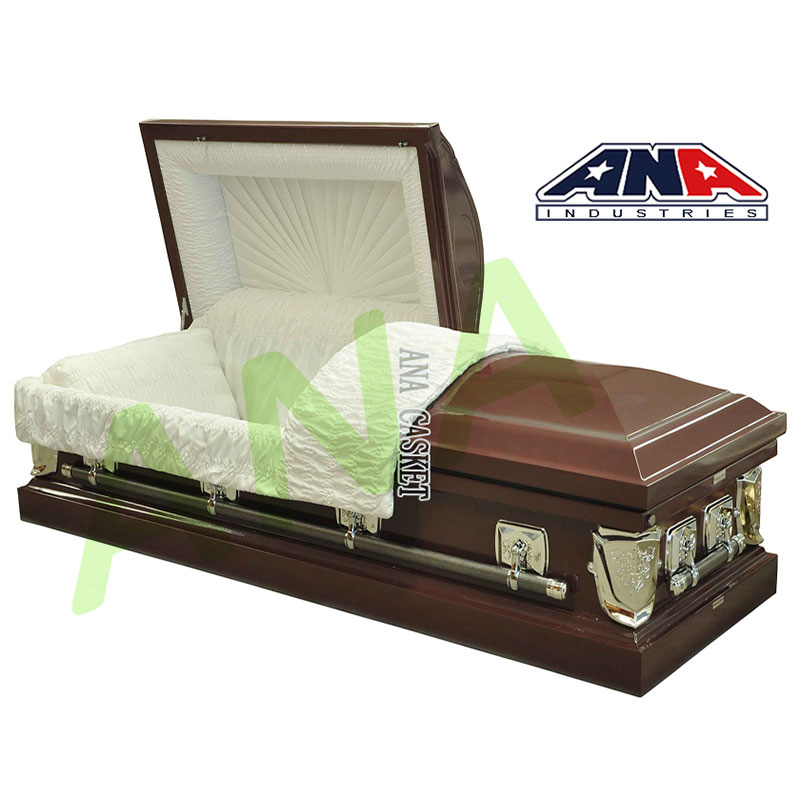
The thicker material creates a heavy, durable product. An empty 18 Gauge Steel Casket weighs approximately 200 to 220 pounds. This added mass provides a distinct structural baseline. The rigid frame offers higher resistance to denting during transport. Pallbearers and funeral directors handle these units frequently. The extra thickness prevents accidental cosmetic damage during tight maneuvers inside chapels or cemeteries.
Manufacturers typically pair this thicker steel with premium components. They must justify the higher price tier to consumers. Therefore, you will rarely see an 18 gauge model utilizing basic finishes. Common upgraded features include:
Plush velvet interiors: Factories upgrade the internal lining from standard crepe to luxurious velvet. This fabric feels softer and creates an elegant presentation.
Complex paint finishes: Artisans often apply multi-layered or brushed paint finishes. Brushed finishes require intensive hand-sanding to expose the raw steel grain. This creates a striking two-tone visual effect.
Upgraded hardware: These models feature heavier-duty locking mechanisms. They also utilize premium swing-bar hardware. The moving handles look substantial and provide an ergonomic grip for pallbearers.
Almost all 18 gauge models feature a rubber gasket seal. Industry marketing frequently labels these as protective caskets. The rubber gasket sits seamlessly between the lid and the base. You lock it using a specialized key. This mechanism seals out immediate dirt and air. However, environmental limitations must be transparently acknowledged. No rubber gasket can indefinitely defy nature. Soil acidity, moisture levels, and vault conditions ultimately determine long-term outcomes.
Cost-conscious buyers often favor lighter models. An empty 20 gauge model weighs approximately 170 to 190 pounds. It uses less raw material, making it lighter. However, engineers design it for maximum strength. Factories utilize advanced stamping techniques. They corrugate and bend the sheet metal at precise angles. These folds ensure rigid structural integrity. The casket will not buckle or warp under standard conditions.
Feature sets for these models focus entirely on the price-to-value ratio. Manufacturers design them to look dignified without inflating production costs. Buyers receive excellent quality without unnecessary frills. Typical features include:
Standard interiors: These models use durable crepe or twill fabrics. They look highly presentable but cost significantly less than velvet.
Solid paint finishes: Factories apply solid, single-color paint finishes. You will find fewer brushed or complex two-tone options. Baked-on enamel provides a beautiful, high-gloss shine.
Stationary hardware: Many models feature fixed handles. Some use lighter swing-bar handles. Both options function perfectly but require less expensive metal casting.
Configuration flexibility represents another major advantage. Buyers can choose between gasketed and non-gasketed models. When you browse a non-gasketed 20 Gauge Steel Casket, you will notice significant upfront savings. Skipping the rubber seal removes complex locking hardware from the manufacturing process. Alternatively, opting for a gasketed 20 Gauge Steel Casket adds a rubber seal for peace of mind. Both configurations serve their purpose flawlessly. They allow buyers to align the final product directly with their budget.
Choosing between these two gauges requires a practical evaluation. You must weigh aesthetic desires against financial realities. The fundamental purpose of both products remains identical. They safely and respectfully hold human remains. The differences lie strictly in cosmetics, weight, and price.
First, evaluate your budget allocation. A noticeable price-to-value gap exists here. You will typically see a $400 to $1,000 difference between the two gauges. Sometimes the gap stretches even further for highly customized models. Assess whether the cosmetic upgrades justify this price increase. Does your family strongly prefer velvet over crepe? Does a brushed two-tone exterior hold deep personal significance? If aesthetics rank highest, the premium model makes sense. If you prioritize strict budget adherence, the thinner gauge performs perfectly.
Next, consider cemetery and vault compliance. Families often worry about cemetery rules. Clarify this fact immediately: cemeteries require an outer burial container. They mandate a concrete vault or grave liner regardless of your casket choice. The earth above a grave weighs thousands of pounds. The concrete vault supports this massive weight. The casket does not bear the earth's crushing force. Therefore, confirm both 18 and 20 gauge models meet all standard domestic cemetery structural requirements. They are equally compliant.
Finally, we must address the trustworthiness of preservation claims. The funeral industry has historically perpetuated a preservation myth. Many buyers assume thicker steel prevents natural decomposition. Objectively speaking, no casket halts natural decomposition. Thicker steel delays rust slightly longer. A gasket delays initial element intrusion. However, avoid unverifiable promises regarding long-term preservation. You are buying dignity and presentation, not a time capsule.
Metal Casket Comparison Summary
Feature Category | 18 Gauge Steel | 20 Gauge Steel |
|---|---|---|
Material Thickness | Thicker (~1/20th inch) | Thinner (~1/32nd inch) |
Average Empty Weight | 200 – 220 lbs | 170 – 190 lbs |
Typical Interior Fabric | Premium Velvet | Standard Crepe or Twill |
Common Exterior Finish | Brushed or Two-Tone Paint | Solid, Single-Color Gloss |
Relative Price Point | Higher Premium | Highly Economical |
Practical execution matters just as much as material science. You must consider the physical realities of a funeral service. Pallbearer limitations represent a significant factor. The extra 30 to 50 pounds of an 18 gauge model makes a noticeable difference. Imagine six elderly family members carrying the unit. Add the weight of the deceased to the 220-pound empty frame. The total weight easily exceeds 400 pounds. Less physically capable pallbearers might struggle across uneven cemetery grass. A lighter 20 gauge model reduces this physical strain significantly.
You must also understand your legal rights. Buyers often feel pressured to purchase directly from funeral homes. However, the FTC Funeral Rule protects consumers. The federal government enacted this rule in 1984. It guarantees your right to purchase a casket from a third-party retailer online. You can buy either gauge without incurring receiving fees from the funeral home. They must accept your purchased item without penalty or pushback.
Finally, factor shipping and delivery logistics into your timeline. Thinner 20 gauge caskets require careful transit. They face a slightly higher risk of cosmetic denting if mishandled. Therefore, you must buy from retailers utilizing specialized freight logistics. Standard shipping carriers often damage large items. Seek vendors who use dedicated Less-Than-Truckload (LTL) carriers. Ask the retailer about their inspection and packaging protocols. Proper foam wrapping and reinforced cardboard prevent transit damage entirely.
Choosing the right casket ultimately depends on a few straightforward priorities. The gauge system should no longer feel intimidating. You now possess the knowledge to navigate this decision confidently.
Here is your final decision matrix:
Choose a 20 gauge steel casket for reliable structural integrity. It offers ease of handling and ensures strict budget adherence. It provides dignified aesthetics without unnecessary financial strain.
Choose an 18 gauge steel casket if premium aesthetics are vital. If velvet interiors, brushed finishes, maximum dent resistance, and higher perceived heft are priorities for the service, the premium tier delivers.
Take action based on your specific requirements. We encourage you to browse specific collections online. Compare our 18 gauge and 20 gauge inventory side-by-side. Look closely at the interior fabrics and exterior finishes. If you have concerns about shipping times, contact support for accurate freight delivery timelines in your area.
A: Not to the untrained eye. The primary visual difference lies in the interior fabric, utilizing crepe versus velvet. The complexity of the paint finish also varies. The steel itself does not look fundamentally different once painted. Visitors attending a service will rarely notice the gauge thickness.
A: Yes. Standard 20 gauge caskets support standard weight limits, typically up to 300 pounds. Engineers use metal stamping techniques to ensure the thinner steel remains rigid. For higher weights, oversized caskets are recommended. These specialized units often utilize 18 gauge steel for added width and rigidity.
A: Both are susceptible to oxidation over decades underground. While 18 gauge has slightly more material to rust through, environmental factors play a much larger role. Soil acidity, underground moisture levels, and concrete vault quality impact longevity far more than the initial steel gauge difference.


